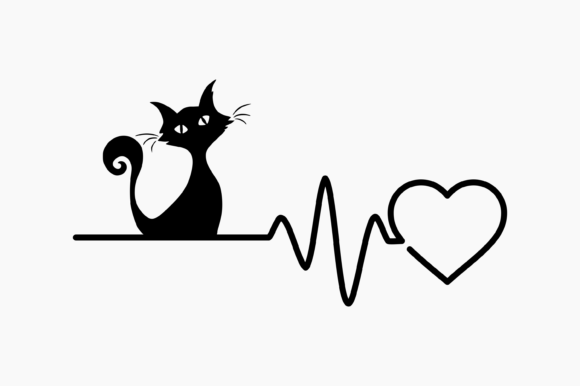
Heart Beat Cat Love
A Designer’s First Look: Sweet, Simple, and Slightly Sentimental
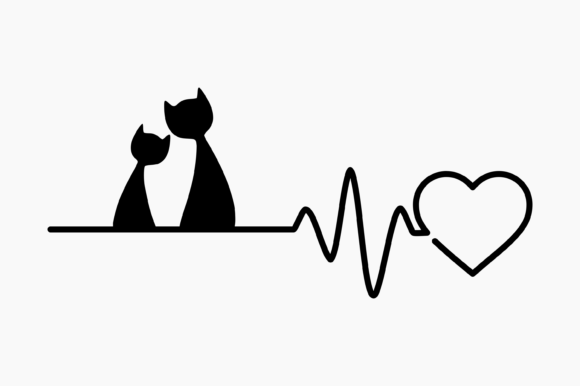
When I opened Heart Beat Cat Love for the first time, I didn’t see just another cat graphic—I saw a quiet moment of warmth. The heart-shaped ECG line wrapping gently around a stylized cat head feels intentional, not cutesy. It’s minimal but expressive: no excessive whiskers, no cluttered details—just clean curves, balanced negative space, and a visual rhythm that reads instantly at 3 inches wide. As an embroidery designer who’s stitched hundreds of pet-themed pieces for boutique clients and Etsy shops, I immediately pictured this on a soft cotton tote bag—something a local café might hand out to regulars who bring their cats in for “paw-ty” mornings.
Where It Shines: Real Projects, Real Stitching
Heart Beat Cat Love works best where clarity and charm matter more than complexity. I tested it as a machine embroidery design on a mid-weight organic cotton sweatshirt—and it landed beautifully. The satin stitch outline around the heart and cat head held crisp definition without pulling, and the fill stitch inside the heart stayed smooth, even with moderate stitch density. For custom apparel, baby embroidery, or nursery decor, this design feels like a thoughtful upgrade over generic paw prints or cartoon cats. It carries emotional weight without being saccharine—ideal for personalized gifts like embroidered pillow covers for new pet parents or tea towels for a vet clinic’s holiday gift shop.
It also translates well across formats beyond thread. Because it’s delivered as SVG, PNG, EPS, and DXF cut files, I used the vector version to mock up a vinyl-appliqué patch for a small batch of denim aprons. The clean lines scaled down to 2.5 inches without losing integrity—no jagged edges, no collapsed corners. That versatility makes Heart Beat Cat Love a smart pick for craft business owners juggling multiple product types: one design, multiple outputs—stickers, mugs, iron-ons, and finished embroidered patches—all with consistent brand tone.
Where to Pause and Plan Ahead
That said, don’t rush this into every project. On thin or stretchy fabric—like lightweight jersey tees or ribbed baby onesies—test stitch density carefully. The heart’s curve includes a few tight turns; if your machine pushes too many stitches into those zones, you risk puckering or thread breakage. I recommend using a medium-weight tear-away stabilizer and reducing density by 5–8% on delicate substrates.
Also, avoid placing Heart Beat Cat Love near high-stress seams (like shoulder joints on caps) or on heavily textured surfaces (terry cloth towels, bouclé blankets) unless you’re willing to adjust underlay or add extra stabilizer layers. And while the design looks lovely in black thread on light fabric, its subtle contour relies on contrast—so double-check how it reads on dark fabric using a printable mockup before committing to a full run.
Small Hoop? Small Details? Here’s What to Watch
- Hoop size: It fits comfortably in a 4×4 hoop—but barely. If you’re stitching on curved surfaces like baseball caps, confirm your cap frame allows clean access to the full shape without shifting.
- Fabric texture: On linen or burlap, the fine line work may soften. Consider simplifying the heart’s inner pulse line to a single running stitch if texture overwhelms detail.
- Thread colors: This design thrives with tonal contrast—not just black/white. Try deep navy on oatmeal canvas, or rose quartz on heather grey. Avoid low-contrast combos (e.g., light grey thread on off-white fabric) unless you want a whisper-thin effect.
What It Adds to Your Finished Product—Beyond Aesthetics
As a designer reviewing Heart Beat Cat Love for commercial embroidery use, I notice how it elevates perceived value. Unlike busier cat motifs, this one invites pause—not just recognition. Customers comment on it. (“Is that a heartbeat?” “My cat *is* my heartbeat.”) That kind of resonance builds trust. When you sell embroidered tote bags or baby onesies with Heart Beat Cat Love, you’re not just selling craft—you’re offering gentle storytelling. That matters for Etsy sellers curating heartfelt collections and for small shop owners building repeat customers through emotional connection.
It also supports brand consistency. Whether you’re using it for a seasonal holiday embroidery collection or as a signature motif across your craft business’s social media mockups, its clean silhouette scales reliably across print, web, and stitch. No awkward cropping. No lost detail in thumbnails. Just recognizable, respectful, and quietly confident design.
Practical Notes Every Embroidery Designer Should Run Through
- Test the design on scrap fabric *first*—especially if stitching on knit, fleece, or dark fabric.
- Review stitch density in your embroidery software. Adjust if needed for fabric weight or thread type.
- Confirm hoop size compatibility before digitizing or sending to production.
- Inspect small details—like the tip of the heart’s pulse line—at 200% zoom. Does it hold clean geometry?
- Try black-and-white and inverted mockups to assess contrast and legibility.
- Use proper stabilizer: medium tear-away for stable wovens, cut-away for knits.
- Verify licensing terms—this is a digital embroidery file for unlimited use, but always recheck before reselling finished items or bundling as part of a digital product.
Final Thought: A Design That Feels Like a Choice, Not a Compromise
Heart Beat Cat Love won’t dominate a tradeshow booth or win awards for technical complexity—but that’s not its job. Its strength lies in restraint, warmth, and quiet professionalism. It belongs on the sleeve of a handmade apron, the corner of a baby blanket, the chest of a sweatshirt sold at a local indie bookstore. It’s the kind of design that makes a customer smile twice: once when they see it, and again when they realize how thoughtfully it’s been stitched. For crafters, Etsy sellers, and small shop owners building real relationships through handmade product—it’s not just another graphics download. It’s a small, steady pulse of intention.