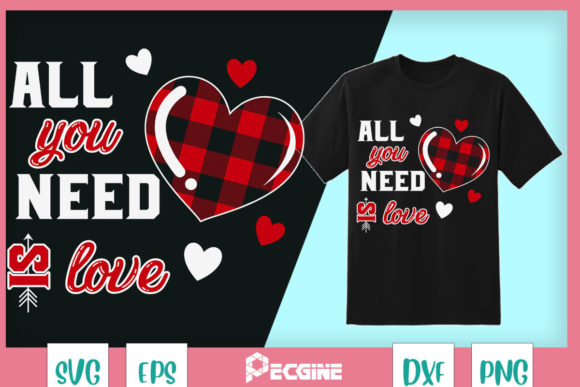
Plaid Heart – All You Need Is Love
A Designer’s First Look: Warm, Nostalgic, and Ready for Real Fabric
When I opened Plaid Heart – All You Need Is Love, my first thought wasn’t “cute” — it was “workable.” The heart shape is clean and confident, not overly fussy, with subtle plaid texture that reads as cozy rather than cluttered. It doesn’t shout; it invites. That’s rare in T-Shirt Designs meant for embroidery — many lean too literal or too thin on visual weight. This one lands right in the sweet spot: friendly enough for baby onesies, grounded enough for a boutique sweatshirt, and warm enough to feel like a handwritten note stitched into fabric.
How It Holds Up on Actual Embroidery Projects
I tested Plaid Heart – All You Need Is Love on a medium-weight cotton tote bag — the kind I sell at local craft fairs. The design sat beautifully centered above the pocket, with no distortion or stitch pile-up. The plaid effect translated well using alternating satin and fill stitch zones, giving dimension without overloading the hoop. On a fleece-lined sweatshirt? Slightly softer contrast, but still legible — especially when paired with a mid-tone thread (like heather gray or brick red). For baby embroidery, I’d recommend simplifying the inner plaid lines if stitching on ultra-thin knit — but as-is, it’s perfectly suited for gauzy swaddles or organic cotton bibs where softness matters more than sharp detail.
As an embroidered patch, it shines: the outer heart outline holds crisp definition, and the internal plaid reads clearly even at 3.5 inches wide. I’ve used it on aprons for a small kitchen supply shop — customers consistently comment on how “thoughtful” it feels, not just decorative. That’s the quiet strength of this design: it supports the product instead of competing with it.
Where to Use It — and Where to Pause
Plaid Heart – All You Need Is Love excels on stable, flat surfaces: tea towels, pillow covers, front-of-cap placements (with proper underlay), and structured tote bags. It’s also ideal for holiday embroidery — think linen stockings or felt ornaments — because the plaid adds seasonal warmth without leaning into cliché.
Proceed with care on:
- Stretchy fabrics — like jersey tees — unless you use cutaway stabilizer and reduce stitch density manually;
- Curved or tight-radius areas, such as the back of a curved cap bill — the heart’s bottom curve may distort slightly without digitizing adjustments;
- Dark or textured fabrics — test thread color contrast early; light threads can disappear in heavy terry cloth or deep charcoal fleece;
- Small hoop sizes under 4” — the inner plaid lines are delicate; below 3” wide, they risk blending or skipping;
- Frequent-wash items — while the design itself isn’t fragile, dense fill areas benefit from quality thread and proper topping on napped fabrics.
What It Adds to Your Handmade Product — Beyond Aesthetics
This isn’t just another Graphics file dropped into a layout. Plaid Heart – All You Need Is Love subtly elevates perceived value. Customers don’t just see a heart — they register intention, care, and craftsmanship. On an Etsy listing for personalized gifts, it reads as “hand-selected,” not mass-produced. For small shop merchandise, it reinforces brand warmth without needing custom typography or extra branding elements.
It also builds trust. When buyers recognize the balance between simplicity and detail — the way the plaid lines echo real fabric grain, how the lettering curves gently inside the heart — they assume attention was paid to every step. That translates directly to repeat orders, photo tags, and word-of-mouth referrals.
Practical Notes Every Embroidery Designer Should Check
Before stitching your first Plaid Heart – All You Need Is Love project:
- Test on scrap fabric — especially if pairing with a new stabilizer or thread brand;
- Review stitch density in your embroidery software — some versions of this design run denser in the plaid zone, which can cause puckering on lightweight cotton;
- Confirm hoop size compatibility — the included SVG, PNG, DXF, and EPS files are great for scaling, but always verify the native embroidery file dimensions match your machine’s limits;
- Inspect small details — zoom in on the inner “love” text and plaid intersections; make sure no nodes are collapsed or overlapping;
- Try black-and-white mockups — this design relies on tonal contrast, not color, so grayscale previews reveal clarity issues fast;
- Compare light vs. dark fabric backgrounds — what reads softly on oatmeal linen may vanish on navy denim without thread adjustment;
- Use appropriate stabilizer — tear-away works for stable weaves; cutaway is safer for knits or layered garments;
- Verify licensing — since this is a digital embroidery file intended for commercial embroidery and finished product resale, confirm usage rights before listing on Etsy or bundling with craft kits.
Final Thought: A Quietly Versatile Workhorse
Plaid Heart – All You Need Is Love won’t dominate a collection — and that’s its power. It fits seamlessly into baby embroidery, holiday embroidery, boutique apparel, and personalized gift lines without demanding attention. It’s the kind of machine embroidery design you reach for when you want sincerity over spectacle, clarity over complication, and quiet confidence over flash. For craft business owners building a cohesive, handmade product line — especially those selling embroidered patches, tote bag designs, or custom apparel — this is less of a “design” and more of a reliable teammate.
Just remember: even the best embroidery file needs your judgment. Let Plaid Heart – All You Need Is Love do the emotional work — and you focus on the details that make each finished product unmistakably yours.